Whether a Maltipoo Gets Bladder Stones
It’s a truly frightening moment when you suspect something isn't quite right with your beloved Maltipoo, especially when it comes to something as vital as their urinary health. Many Maltipoo parents worry about bladder stones, and for good reason – these tiny bundles of fluff, while adorable, can be predisposed to certain health conditions that catch us off guard. This guide will walk you through everything you need to know about bladder stones in Maltipoos, from identifying the signs to effective treatment and crucially, how to prevent them in the first place, helping you navigate this common but concerning issue with confidence and knowledge.
Understanding Bladder Stones in Maltipoos
The thought of your tiny Maltipoo experiencing discomfort, or worse, a serious health issue like bladder stones, can be incredibly distressing. It’s a common concern among owners of small breeds, and understanding why these stones form and what they are made of is the first step in protecting your furry family member.
What Are Bladder Stones and Why Do Maltipoos Get Them?
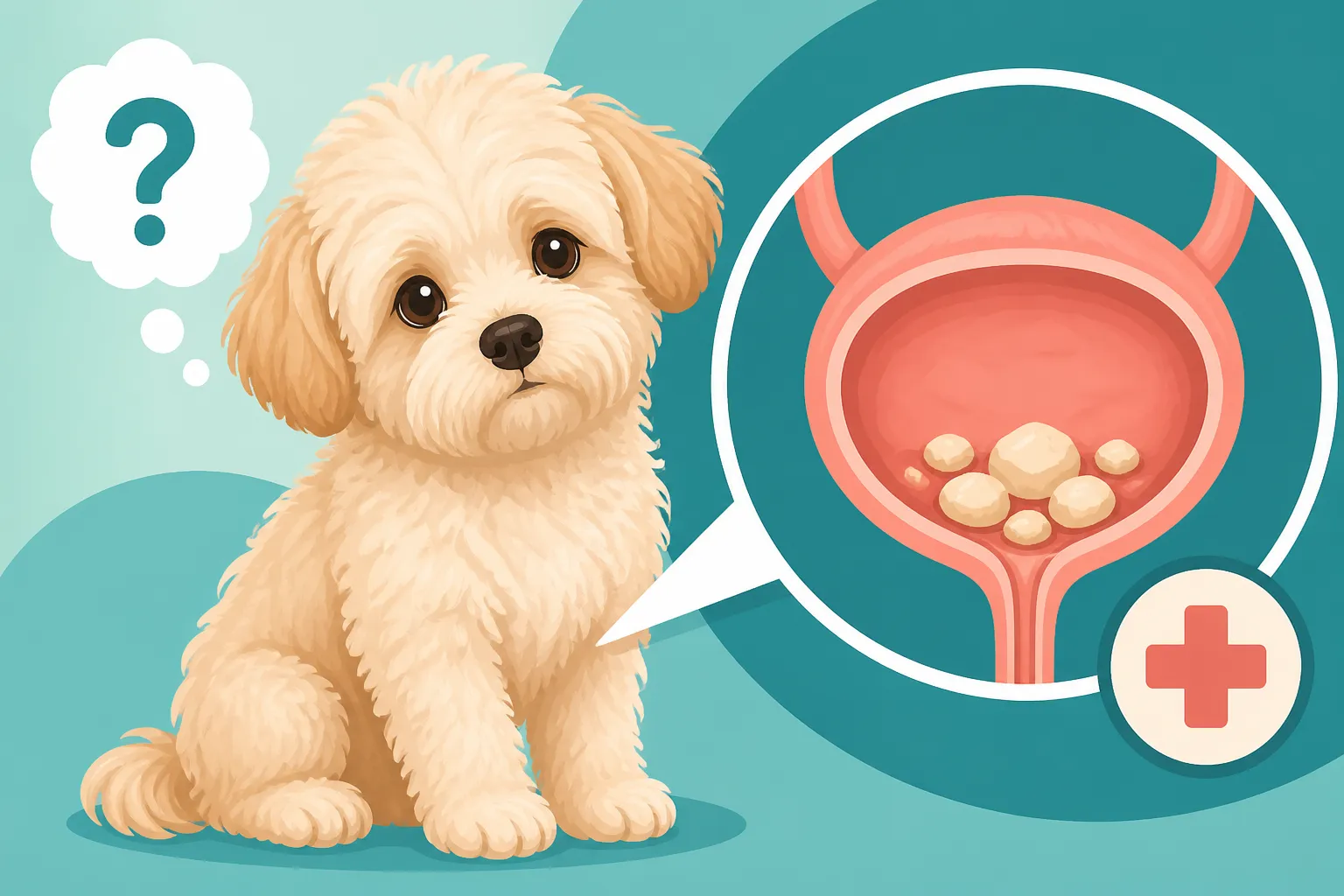
Bladder stones, medically known as uroliths, are essentially mineral concretions that form in the urinary bladder. Think of them like tiny, or sometimes not-so-tiny, pebbles that develop from various minerals and waste products in your dog's urine. They can range from microscopic crystals that irritate the bladder lining to large, jagged stones that cause significant pain and obstruction.
There are several types of bladder stones, but the two most common ones seen in dogs, and particularly relevant for Maltipoos, are struvite and calcium oxalate stones.
- Struvite Stones: These stones are almost always associated with urinary tract infections (UTIs). Certain bacteria produce an enzyme that increases the pH of the urine, making it more alkaline. This alkaline environment, combined with the presence of magnesium, ammonium, and phosphate (MAP) in the urine, creates the perfect breeding ground for struvite crystals to form and clump together into stones. Because Maltipoos, particularly the female ones, can be prone to UTIs due to their anatomy or grooming practices, they can unfortunately be susceptible to struvite stones.
- Calcium Oxalate Stones: These stones are formed from calcium and oxalate crystals. Unlike struvite stones, they are not typically caused by infection and tend to form in acidic or neutral urine. Certain breeds, including the Miniature Poodle and Maltese (the parent breeds of the Maltipoo), have a genetic predisposition to developing calcium oxalate stones. This genetic link means that your Maltipoo, even without a history of UTIs, might be more at risk simply due to their lineage. Factors like diet (high protein, high calcium), dehydration, and certain metabolic conditions can also contribute to their formation. It’s a bit of a double whammy for our little Maltipoos; they can inherit predispositions from both sides of their family tree.
Small dog breeds, in general, are more prone to bladder stones for a few reasons. They often have more concentrated urine if they don't drink enough water or aren't given frequent potty breaks. Their smaller bladders might also mean urine sits there longer, allowing more time for crystals to form. Plus, the sheer smallness of their urethra means even a small stone can cause a complete and dangerous blockage, making this a particularly urgent issue for Maltipoos.
Common Signs and Symptoms to Watch For
It's heartbreaking to see your Maltipoo in pain, and knowing what signs to look for can help you catch bladder stones early, often before they become an emergency. These symptoms can be subtle at first, often mistaken for simple housetraining regressions or a minor upset, but they quickly escalate.
- Frequent Urination (Pollakiuria): You might notice your Maltipoo asking to go outside much more often than usual, or even squatting to pee repeatedly, only to produce a tiny trickle or nothing at all. This isn't just an annoyance; it's a sign that their bladder is irritated and they feel a constant urge to relieve themselves.
- Straining to Urinate (Stranguria): This is a critical symptom. Your Maltipoo might hunch over, push, or strain uncomfortably when trying to urinate. You might even hear them whimper or cry out during the process. This straining indicates pain and difficulty, often because stones are blocking the flow or causing severe irritation.
- Blood in Urine (Hematuria): Seeing pink, red, or rust-colored urine is an undeniable red flag. The stones can scrape and irritate the bladder lining, causing bleeding. Sometimes, the blood might not be visible to the naked eye but will show up on a urinalysis.
- Urinary Accidents in the House: If your otherwise perfectly house-trained Maltipoo suddenly starts having accidents indoors, especially in unusual spots, don't just scold them. This can be a strong indicator of bladder discomfort or an inability to hold their urine due to the irritation caused by stones. They might simply not be able to "hold it" long enough, or the pain is causing them to void wherever they are.
- Licking the Genital Area Excessively: This is a self-soothing behavior that indicates irritation or pain. If your Maltipoo is constantly licking their vulva or penis, it's a sign that something is bothering them in that region.
- Pain or Tenderness in the Abdomen: Some dogs might show signs of abdominal discomfort if you touch their belly, or they might seem generally withdrawn, lethargic, or have a decreased appetite. They might be reluctant to jump or play as much as usual due to the underlying pain.
It's easy to dismiss some of these signs as minor behavioral quirks, especially the house accidents. But with a Maltipoo, whose small size can make urinary blockages incredibly dangerous, it's crucial to take any of these symptoms seriously. Early detection makes a world of difference, potentially saving your furry friend from a life-threatening emergency. If you notice any combination of these signs, don't hesitate; a vet visit is absolutely necessary.
Diagnosing and Treating Bladder Stones
The moment you suspect your Maltipoo might have bladder stones, time is of the essence. Getting an accurate diagnosis quickly is crucial for effective treatment and preventing complications.
How Vets Confirm Bladder Stones
When you bring your Maltipoo to the vet with symptoms suggestive of bladder stones, your vet will perform a thorough examination and likely recommend several diagnostic tests. They're trying to figure out if stones are present, what type they are, and if there's an underlying infection.
- Urinalysis and Culture: This is usually the first step. Your vet will collect a urine sample, ideally through cystocentesis (a sterile needle inserted directly into the bladder) to avoid contamination. A urinalysis will check the urine's pH, look for blood, protein, and glucose, and most importantly, identify the presence and type of crystals. Seeing specific crystals (like triple phosphate for struvite or calcium oxalate crystals) can give a strong indication of the stone type. A urine culture is vital to identify any bacterial infection that might be present, especially if struvite stones are suspected, and to determine which antibiotics will be most effective.
- X-rays (Radiographs): Many bladder stones, particularly struvite and calcium oxalate, are "radiopaque," meaning they show up clearly on an X-ray. Your vet will take images of your Maltipoo's abdomen to visualize the bladder. They'll look for shadows indicating stones, their size, shape, and location. Sometimes, special contrast X-rays are used to highlight smaller or less visible stones, providing a clearer picture of the bladder's internal landscape. It’s important to note that not all stone types show up on X-ray, but it's a very effective tool for the most common ones.
- Ultrasound: For stones that might be "radiopaque" (don't show up well on X-ray) or for a more detailed look at the bladder wall and surrounding structures, an ultrasound is invaluable. An ultrasound uses sound waves to create real-time images, allowing the vet to see smaller stones, assess the thickness of the bladder wall, and check for any other abnormalities. This is particularly useful for detecting small stones that might be difficult to see on X-rays or for confirming the presence of stones when X-rays are inconclusive.
Combining these diagnostic tools allows your vet to create a comprehensive picture of what's happening inside your Maltipoo's urinary system. This precision is critical because the type of stone dictates the treatment approach.
Treatment Options: From Diet to Surgery
Once bladder stones are confirmed and their type identified, your vet will recommend a treatment plan tailored to your Maltipoo's specific situation. The approach can vary significantly based on the stone composition, size, and the dog's overall health.
- Dietary Management: For struvite stones, diet is often the first line of attack. Specific prescription diets are formulated to lower urine pH (make it more acidic) and reduce the concentration of minerals that form struvite stones. These diets also encourage increased water intake, which helps to flush the bladder. With diligent feeding of the prescribed diet and appropriate antibiotics for any concurrent UTI, struvite stones can often dissolve completely over several weeks to months. This is a huge relief for many owners, as it avoids surgery. For calcium oxalate stones, diet plays a preventative role after removal, aiming to reduce the recurrence by managing urine pH and mineral levels, though it cannot dissolve existing oxalate stones.
- Antibiotics for UTIs: If a bacterial urinary tract infection is present, especially with struvite stones, antibiotics are essential. The infection must be cleared for the stones to dissolve or to prevent new ones from forming. Your vet will choose an antibiotic based on the urine culture results to target the specific bacteria. It's crucial to complete the entire course of antibiotics, even if your Maltipoo seems to feel better.
- Surgical Removal (Cystotomy): Sometimes, surgery is the most appropriate or only option. This is typically the case for:
- Calcium oxalate stones: These cannot be dissolved by diet and must be physically removed.
- Large or numerous struvite stones: If stones are too large to dissolve effectively with diet in a reasonable timeframe, or if they are causing immediate distress or blockage, surgery may be recommended.
- Urinary obstruction: If a stone completely blocks the urethra, preventing your Maltipoo from urinating, this is a life-threatening emergency requiring immediate surgical intervention to relieve the obstruction.
- Recurrent stones despite medical management: If stones keep coming back despite dietary and medical efforts, surgery might be necessary to get a "clean slate" and potentially analyze the stone composition more thoroughly.
During a cystotomy, the vet makes an incision into the bladder to remove the stones. The stones are then sent to a lab for analysis to confirm their type, which helps guide future preventative measures. Post-surgery, your Maltipoo will need a period of recovery, pain management, and often a specialized diet to prevent recurrence.
Navigating the costs of diagnosis and treatment can be daunting. From the initial vet visit to specialized diets or potential surgery, the expenses can add up quickly. This is where Insuring a Maltipoo Before Its Knees Go or considering a pet insurance plan like those offered by Healthy Paws early on can provide immense peace of mind, helping you manage unexpected veterinary bills without compromising your Maltipoo's care. Similarly, having a credit line ready for emergencies can be a lifesaver.
Prevention and Long-Term Management
Prevention is always better than cure, especially when it comes to uncomfortable and potentially dangerous conditions like bladder stones. With Maltipoos, whose genetic predispositions and small stature make them vulnerable, being proactive is key.
Proactive Steps for Prevention
Establishing good habits and routine care can significantly reduce your Maltipoo's risk of developing bladder stones. It's about creating an environment that discourages crystal formation.
- Excellent Hydration: This is paramount. Dilute urine is less likely to form crystals because the minerals are more spread out. Ensure your Maltipoo always has access to fresh, clean water. Consider offering filtered water, and refresh their water bowl multiple times a day. If your Maltipoo isn't a big drinker, you might try adding a little water to their kibble or incorporating wet food into their diet, which has a higher moisture content. Even a water fountain can entice some dogs to drink more.
- Regular Potty Breaks: Holding urine for extended periods allows crystals to settle and aggregate in the bladder. Ensure your Maltipoo gets frequent opportunities to urinate, especially first thing in the morning, after meals, before bed, and several times throughout the day. For How Often a Maltipoo Puppy Needs Taking Out, this is even more critical. This constant flushing action helps prevent crystals from forming into stones.
- Balanced Diet and Controlled Minerals: While a high-quality diet is always important, for bladder stone prevention, the specific mineral content and pH-balancing properties can be crucial. If your Maltipoo has a history of stones or is from a breed known to be at risk, your vet might recommend a prescription preventive diet. These diets are carefully formulated to create an unfavorable environment for stone formation. Avoid excessive treats or table scraps that can alter the urine's pH or mineral balance.
- Encouraging Activity: Regular exercise promotes overall health, including better circulation and a more active metabolism, which can contribute to healthier urinary function. An active Maltipoo is also more likely to drink more water and need more potty breaks, further aiding prevention.
- Regular Veterinary Check-ups: Consistent vet visits, including annual wellness exams, are vital. Your vet can perform a routine urinalysis as part of these checks, especially for at-risk dogs. This allows for early detection of crystals or changes in urine pH before they escalate into full-blown stones. Catching microscopic crystals early means you can often intervene with dietary changes before stones even have a chance to form. These regular checks are part of The Yearly Checks a Maltipoo Should Get that can spot issues before they become emergencies.
Remember, prevention isn't just about avoiding problems; it's about giving your Maltipoo the best chance at a long, healthy, and comfortable life.
The Role of Diet and Water Intake
Diet and water intake are perhaps the most powerful tools you have in your arsenal for preventing bladder stones in your Maltipoo. It's not just about what they eat, but also how it affects their internal chemistry.
- Understanding Urine pH: The pH of your Maltipoo's urine is a major factor in stone formation. Struvite stones thrive in alkaline (high pH) urine, while calcium oxalate stones are more likely to form in acidic (low pH) urine. Certain diets are specifically designed to adjust urine pH to make it less hospitable for particular types of crystals. For instance, diets aimed at struvite prevention will acidify the urine, while those for oxalate prevention will aim for a neutral or slightly alkaline pH. This delicate balance is why simply changing your dog's food without veterinary guidance can sometimes do more harm than good or prevent recurrence.
- Mineral Control in Diet: The levels of certain minerals, particularly magnesium, phosphorus, and calcium, are carefully controlled in prescription stone-prevention diets. High levels of these minerals can increase the likelihood of crystal formation. For instance, high calcium can contribute to oxalate stones. Your vet will help you choose a diet that minimizes the risk based on your Maltipoo's specific stone history or predisposition. It’s a very different approach from just Feeding a Six Pound Maltipoo by the Ounce, Not the Scoop; it’s about the very composition of the food itself.
- The Power of Water: I cannot stress enough how important consistent hydration is. Water acts as a natural flushing mechanism, literally washing away crystals before they can clump together. If your Maltipoo is reluctant to drink enough, you might need to get creative. Consider:
- Wet Food: Incorporating wet food into their diet significantly increases their daily water intake.
- Water Fountains: Some dogs are more inclined to drink from moving water.
- Multiple Water Bowls: Place bowls in various locations around your home.
- Flavoring Water: A tiny bit of low-sodium broth (check ingredients carefully) can sometimes entice picky drinkers.
- Hydration Additives: Discuss with your vet if any safe, palatable water additives could encourage drinking.
Monitoring your Maltipoo's daily water intake is a good habit. You should know roughly how much they drink in a day. If you notice a significant decrease, it's worth investigating. Some Maltipoos can be quite finicky when it comes to food and water, leading to concerns like Whether a Maltipoo Is a Fussy Eater, which then directly impacts their hydration and bladder health.
By working closely with your veterinarian, you can devise a dietary and hydration strategy that not only helps prevent bladder stones but also supports your Maltipoo's overall health and vitality. This preventative care truly gives them the best chance at a long, happy life.
When to Consult Your Vet Immediately
While regular preventative care is crucial, there are times when immediate veterinary attention is not just recommended, but absolutely critical. Recognizing an emergency can be the difference between a swift resolution and a life-threatening crisis for your Maltipoo.
Recognizing an Emergency
Some signs of bladder stones require you to drop everything and head straight to the emergency vet. This is especially true for small breeds like Maltipoos, where a blockage can develop rapidly and have severe consequences.
- Complete Urinary Blockage: This is the most urgent emergency. If your Maltipoo is straining repeatedly, hunched over, clearly trying to urinate but producing no urine at all, it means their urethra is completely blocked. This is often caused by a stone lodging in the narrow urethra, preventing the flow of urine. This situation is incredibly painful and rapidly becomes life-threatening. Urine backs up into the kidneys, leading to kidney failure, electrolyte imbalances, and potentially a ruptured bladder. Signs might also include severe abdominal pain, vomiting, lethargy, and collapse. If you observe these symptoms, do not wait – get to an emergency vet immediately. Every minute counts.
- Severe Pain and Distress: Beyond straining, if your Maltipoo is crying out when attempting to urinate, panting excessively, trembling, showing extreme restlessness, or becoming unusually aggressive or withdrawn due to pain, these are signs of severe discomfort. While not always a complete blockage, severe pain indicates a serious issue that needs prompt attention to assess the extent of the problem and provide relief.
- Persistent or Heavy Blood in Urine: While some visible blood can occur with bladder irritation, if you notice a significant amount of blood, or if the bleeding is persistent over several hours, it warrants an immediate vet visit. This could indicate a more severe trauma to the bladder lining, a larger or sharper stone, or another underlying problem that needs urgent investigation.
It's natural to panic when you see these signs, but staying calm and getting your Maltipoo to veterinary care quickly is the most important thing you can do. Explain the symptoms clearly to the vet or emergency clinic staff upon arrival.
Ongoing Monitoring for At-Risk Maltipoos
Even after successful treatment or if your Maltipoo has been identified as being at higher risk, consistent monitoring is essential for long-term health. Bladder stones can, and often do, recur if preventative measures aren't strictly maintained.
- Regular Follow-up Vet Visits: Your vet will likely recommend a schedule for follow-up appointments. These might include repeat urinalyses, X-rays, or ultrasounds to ensure that stones have dissolved (if applicable) or that new ones aren't forming. For dogs who have undergone surgery, these checks confirm the bladder is healing well and remains stone-free.
- Serial Urinalysis: For Maltipoos with a history of stones, routine urinalysis might become a part of their ongoing health management. This could be every few months or as advised by your vet. It allows early detection of crystals or changes in urine pH, enabling your vet to make dietary or lifestyle adjustments before stones have a chance to develop.
- Adherence to Prescription Diets: If your Maltipoo is on a prescription diet for stone prevention or dissolution, strict adherence is paramount. Even small deviations or occasional treats not approved by your vet can disrupt the carefully balanced mineral content and pH, leading to recurrence. Ensure everyone in the household understands the importance of feeding only the prescribed diet.
- Monitoring Water Intake and Urination: Continue to closely monitor your Maltipoo's drinking habits and urination patterns at home. Note any changes in frequency, volume, color, or any signs of straining. Keeping a small journal can be helpful to track this over time.
Living with a Maltipoo prone to bladder stones means being extra vigilant, but it doesn't have to be a constant source of anxiety. With dedicated preventative care, close collaboration with your veterinarian, and possibly the support of pet insurance like Healthy Paws for ongoing management, you can provide your furry friend with a comfortable and healthy life. It’s a commitment, but the joy and companionship your Maltipoo brings are more than worth it.
Disclaimer
This guide is intended for informational purposes only and is not a substitute for professional veterinary advice, diagnosis, or treatment. Always seek the advice of your veterinarian or other qualified health provider with any questions you may have regarding a medical condition. Never disregard professional veterinary advice or delay in seeking it because of something you have read in this article.